Patio guides
How patio work goes, start to finish.
Plain-language answers about bases, drainage, frost and stone, written for homeowners who have never hired a patio contractor before.
 01. The base
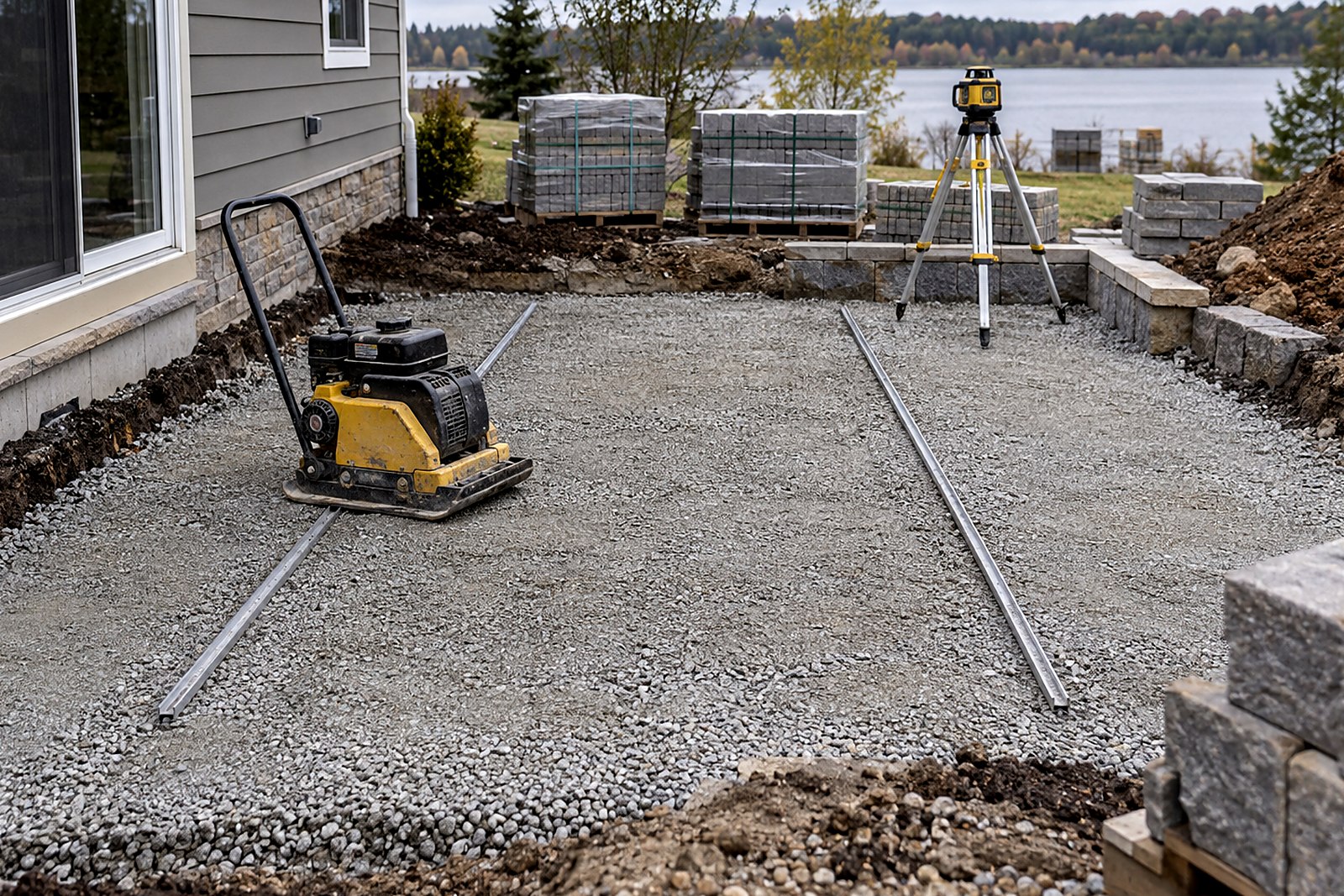
Nine-tenths of it is underground
The pavers you see are the last inch. Everything that decides whether the patio is still flat in ten years is underneath them and invisible when the job is done.
Read the guide →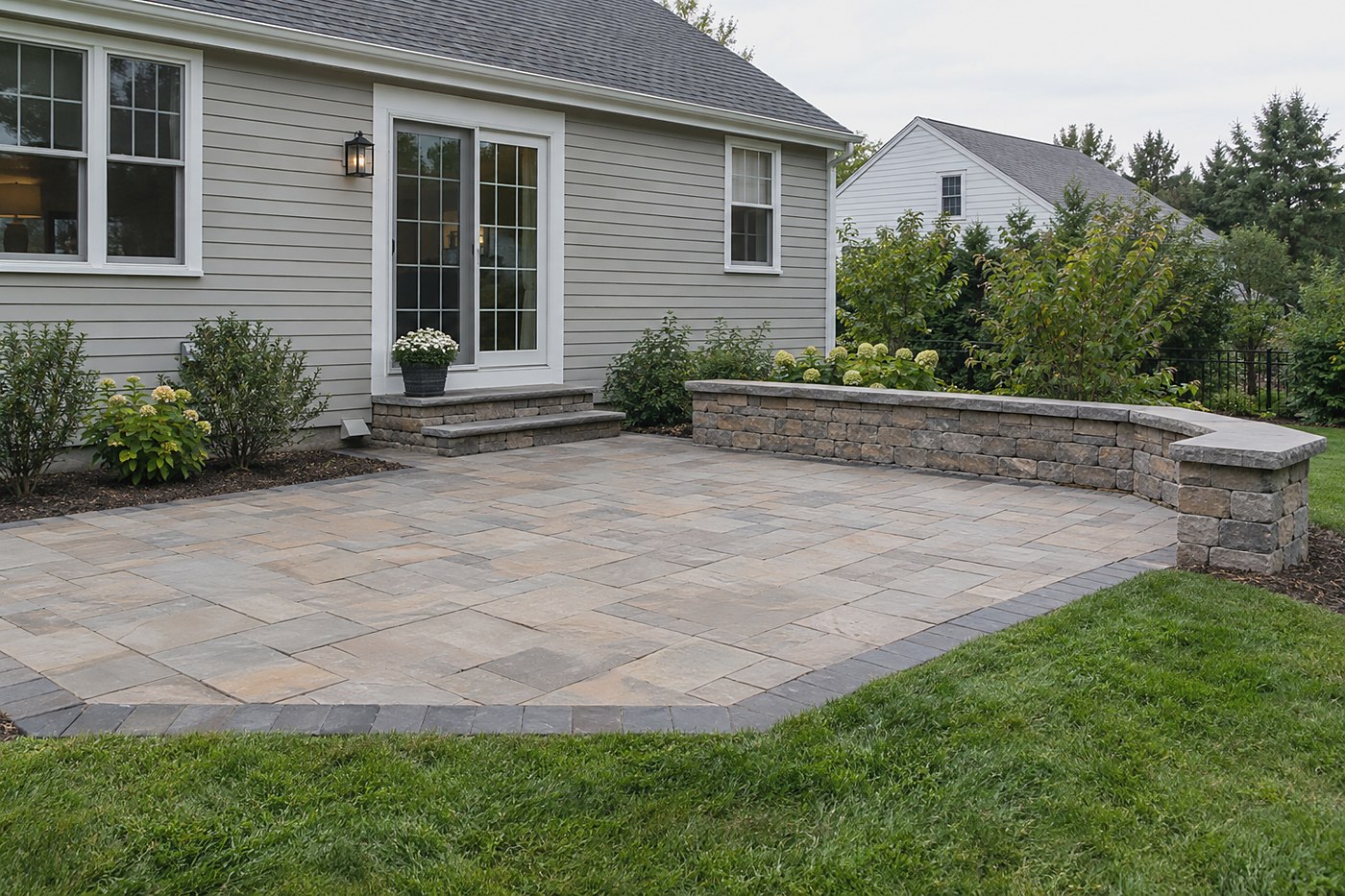 02. Drainage
Water always finds the low spot
A patio should shed water like a roof does: away from the house, off the surface and out. That comes from the slope built into it, not from sand added later.
Read the guide →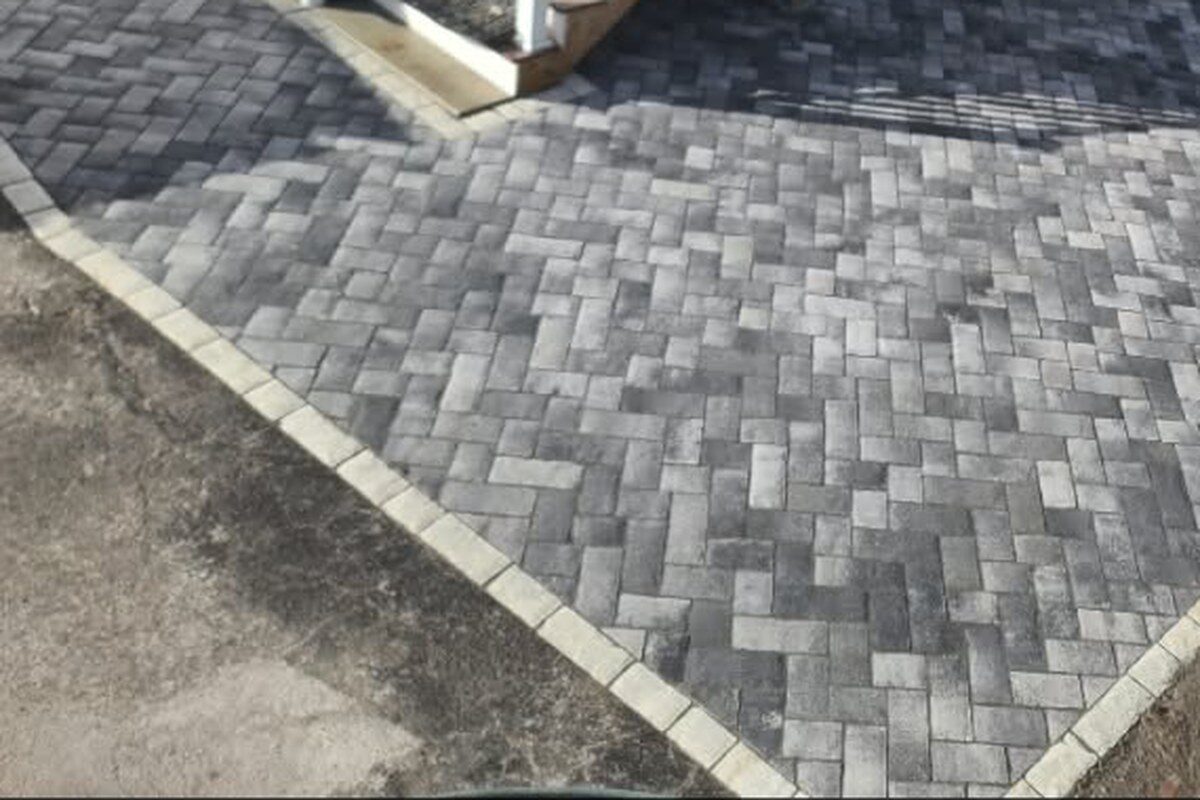 03. Frost
Why the freeze beats shallow work
Ground here freezes and thaws many times over a winter. Each cycle lifts the soil, and anything sitting too close to the surface comes up with it.
Read the guide →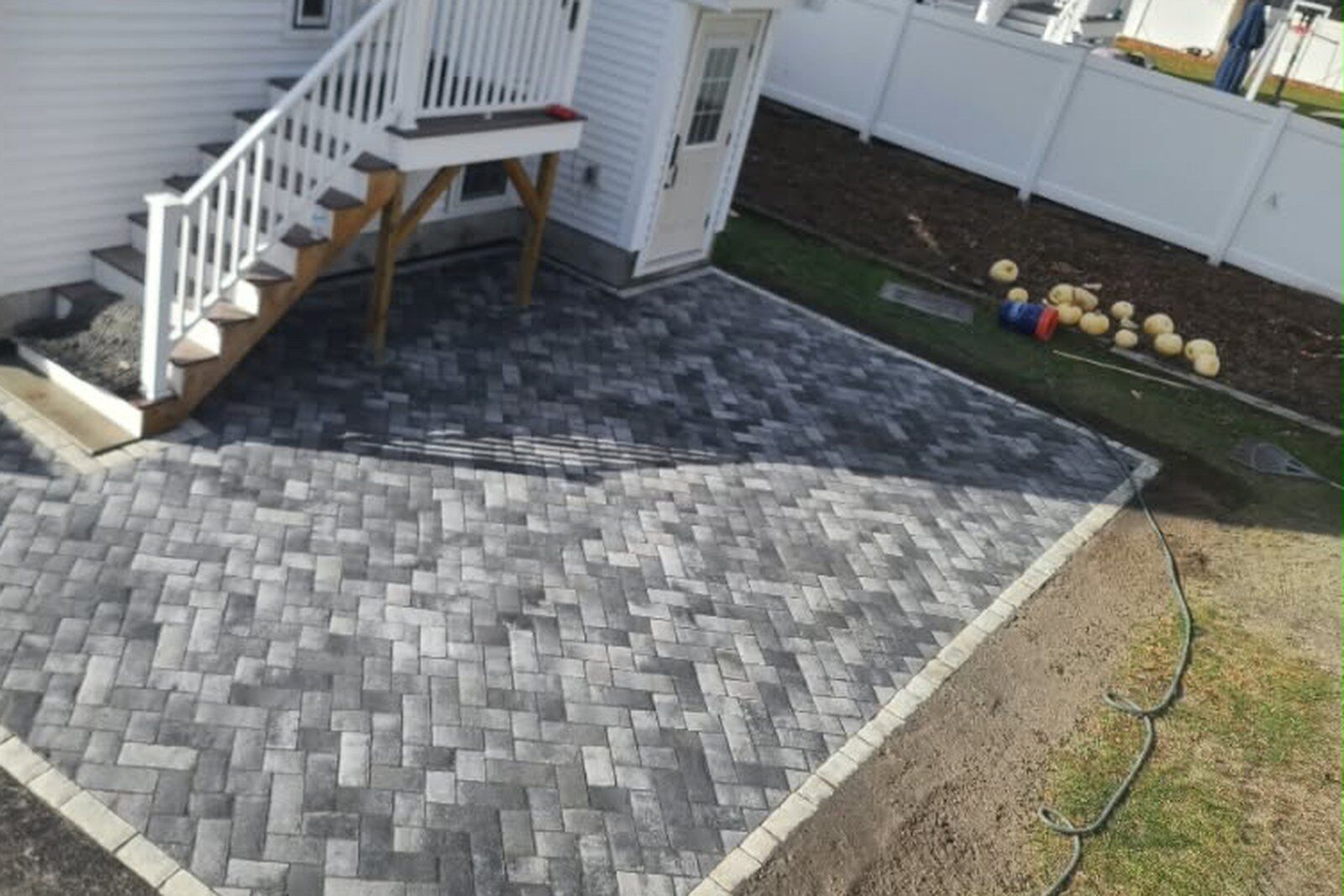 04. Materials
Stone is a budget, not a style
Picking the look is the easy part. What moves the price is the material itself and how much cutting it needs.
Read the guide →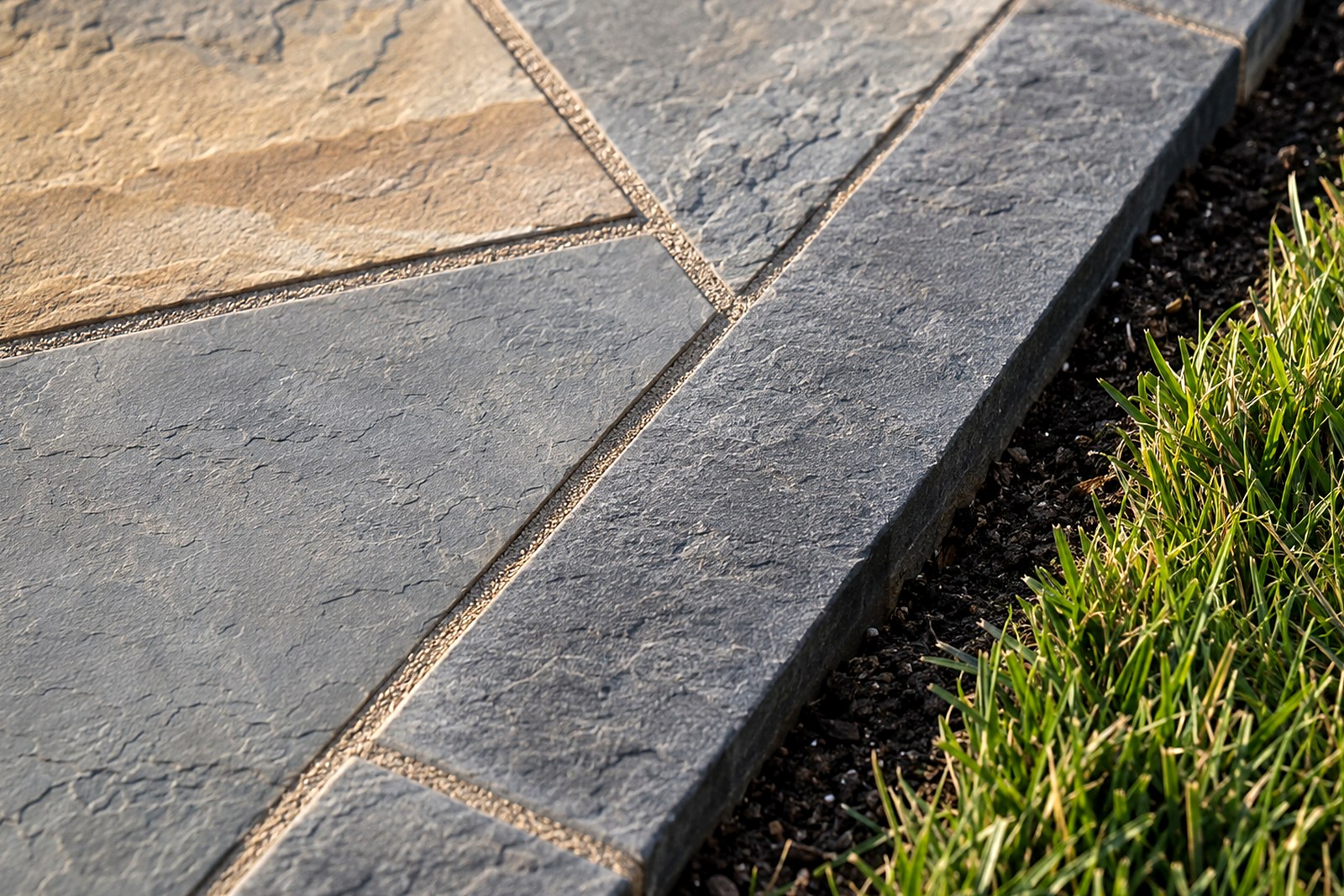 05. The quote
What a real estimate includes
A lump-sum price tells you nothing. The useful ones are itemized enough that you know what you're buying.
Read the guide → 06. Your questions
Ask us anything
You don't need to know any of this to get a good patio. That's our job. But if you have a question about your own yard, the drainage around your house, or a number someone gave you, just ask.
Read the guide → 07. Cost
What a paver patio actually costs
Nobody likes a vague number, so here is how a patio price is actually built: size first, then what is under it, then how hard it is to get to.
Read the guide →
08. Choices
Pavers, concrete or stamped concrete
All three can make a flat outdoor floor. They behave very differently after a Massachusetts winter, and that is the part worth understanding before you pick.
Read the guide →
09. Seasons
Getting a patio through a New England winter
A patio built right survives winter on its own. The things you do at the edges of the season are what keep it looking new.
Read the guide →
10. Hiring
How to spot a good crew from a bad one
You are not expected to know stone. You are allowed to watch how someone works, and that tells you almost everything.
Read the guide →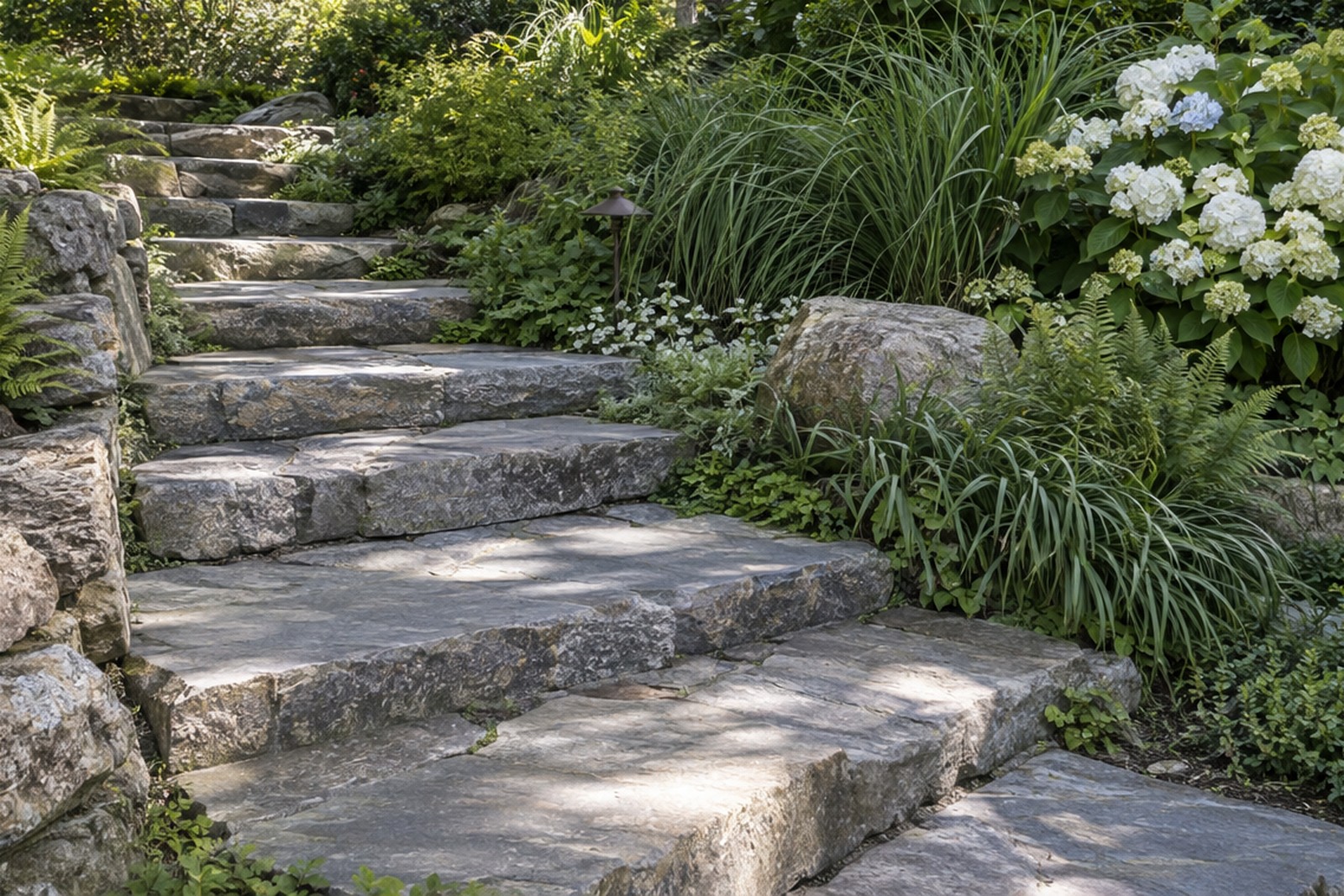 11. Walkways
Walkways, steps and aprons
A walkway is a small patio you use every day. Because you use it every day, the details that fail are the ones you will notice first.
Read the guide →
12. Drainage
Where does your yard drain?
Before anyone talks stone, walk your yard after a real rain. Where the water goes tells you more than any plan.
Read the guide →Start here if you have never hired patio work
Most people find this site with the same question: why is one quote so much lower than another for the same patio? The answer is almost never the stone. It is how deep the contractor plans to dig, how the base gets compacted, and where the water goes. The guides below explain each of those in plain words, with no sales spin, so you can tell a real quote from a thin one.
The base guide is the one to read first, because nine-tenths of a patio is underground. The drainage guide explains why patios sink and walls lean. The frost guide covers the 30-inch depth this part of Massachusetts is built to. From there the cost guide breaks down what actually moves a price, and the quote guide tells you what a good estimate should include.
You do not need to read all of these before calling. If you would rather just talk it through, call Bryce and describe the yard. He will tell you what he needs to see and give you a straight answer without a pitch.
Questions about your yard?
Ask Bryce directly. No pressure, no sales script.