04. Materials
Paver vs. bluestone vs. flagstone
Picking the look is the easy part. What moves the price is the material itself and how much cutting it needs.
The three surfaces people weigh most often are paver, bluestone and flagstone, with dry-stacked fieldstone on the walls. Each carries its own look and its own labor cost, and that gap is mostly about cutting and setting time.
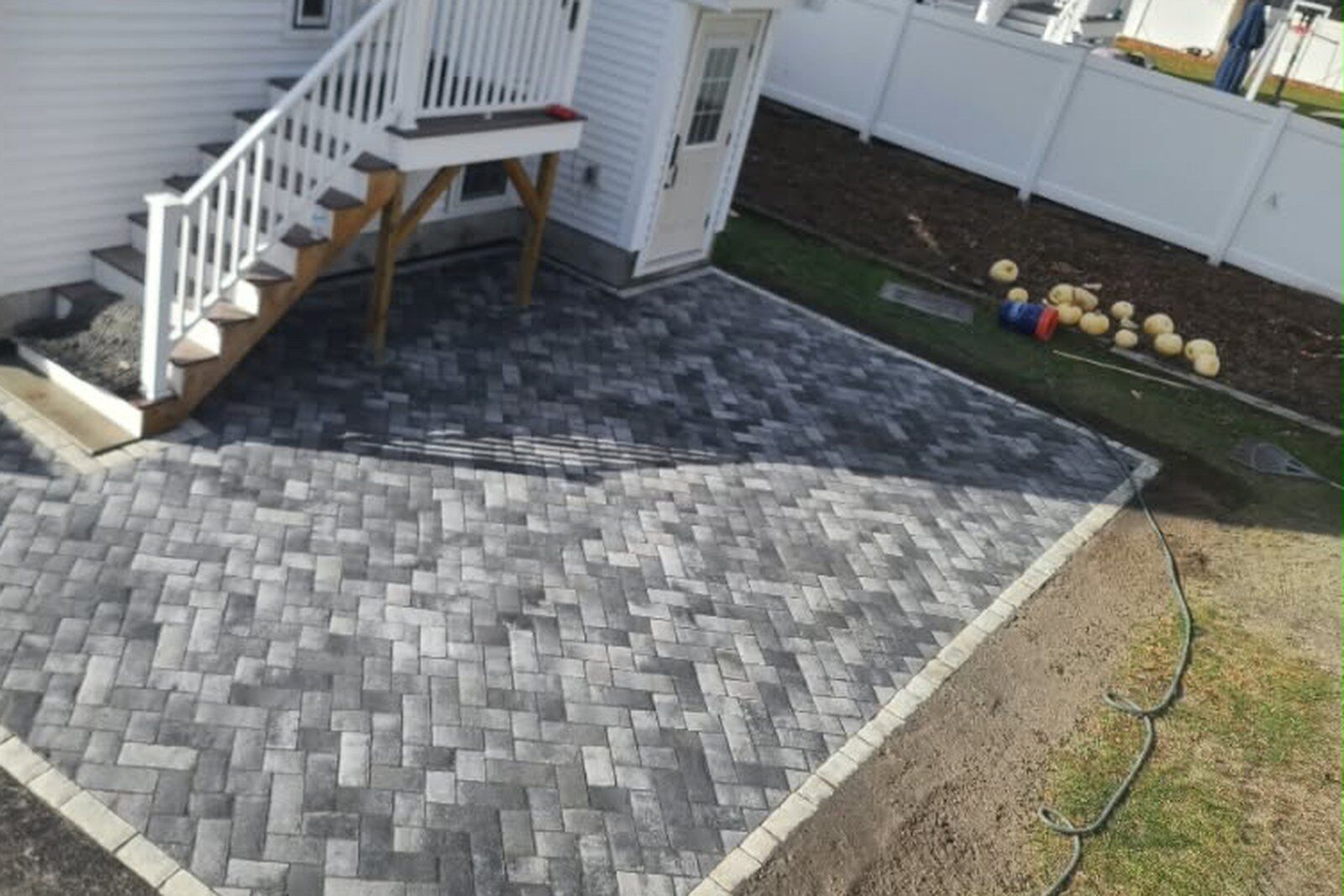
Pavers are uniform, so they go down fast and come with a set thickness that keeps the field consistent. That speed is a real part of why they sit at the friendlier end. Bluestone is cut into slabs of varying size, so every piece is set by hand and the layout is a judgement call the whole way through. Flagstone is the most irregular, so the setting time and the cutting climb again.
Texture and color matter more than the brochure suggests. Lighter stone stays cooler underfoot in July sun, and a busier surface hides the small leaf-and-dirt speckle between cleanings. A flat, uniform field shows every bit of dirt and every subtle low spot. Worth thinking about before you commit.
There is also a middle path a lot of jobs land on: pavers for the field you walk and park on, and natural stone for the one detail people actually look at, like steps, a wall cap or a fire pit ring. You get the durability and the price of pavers where the wear is, and the stone look where the eye goes. Mixing is not a compromise; it is usually the smart money.
Whichever stone you pick, one thing does not change: the base under it and the care in the joints. Cheap stone laid well outlasts expensive stone laid badly, every time, because the surface is only carrying what the base is holding. When someone proposes saving money by thinning the base to spend it on fancier stone, that is the trade to push back on.
Ask what the stone is actually called and where it comes from, because the same look can be two very different products. A paver with a solid body and a consistent thickness lays flat and stays flat. A cheap import that varies in size or thickness fights the installer the whole way and shows it in the joints. The name on the pallet matters more than the photo online.
- Paver uniform, cut to fit, fastest to lay. Good for clean lines and a tight budget.
- Bluestone natural stone, cooler and more varied up close. Costs more per foot and takes longer.
- Flagstone irregular shapes, the traditional look. Lots of cutting, so it lives in the higher range.
- Fieldstone walls dry-stacked, no mortar. Slowest of all, and the one people stop to look at.
Stone choice is a budget conversation as much as a design one, and the right answer is usually a mix: a hard-wearing surface with one feature that carries the look.
Ready when you are.
Free estimates in Mansfield and the towns around it.