08. Choices
Pavers vs concrete vs stamped concrete
All three can make a flat outdoor floor. They behave very differently after a Massachusetts winter, and that is the part worth understanding before you pick.
Poured concrete is one continuous slab. That is its strength and its weakness: when the ground moves under a slab, which it does with our freeze and thaw, the slab cracks, and a crack runs where it wants to. Stamped concrete is the same slab with a pattern pressed into the surface. It looks good on day one and ages with the same slab underneath it.
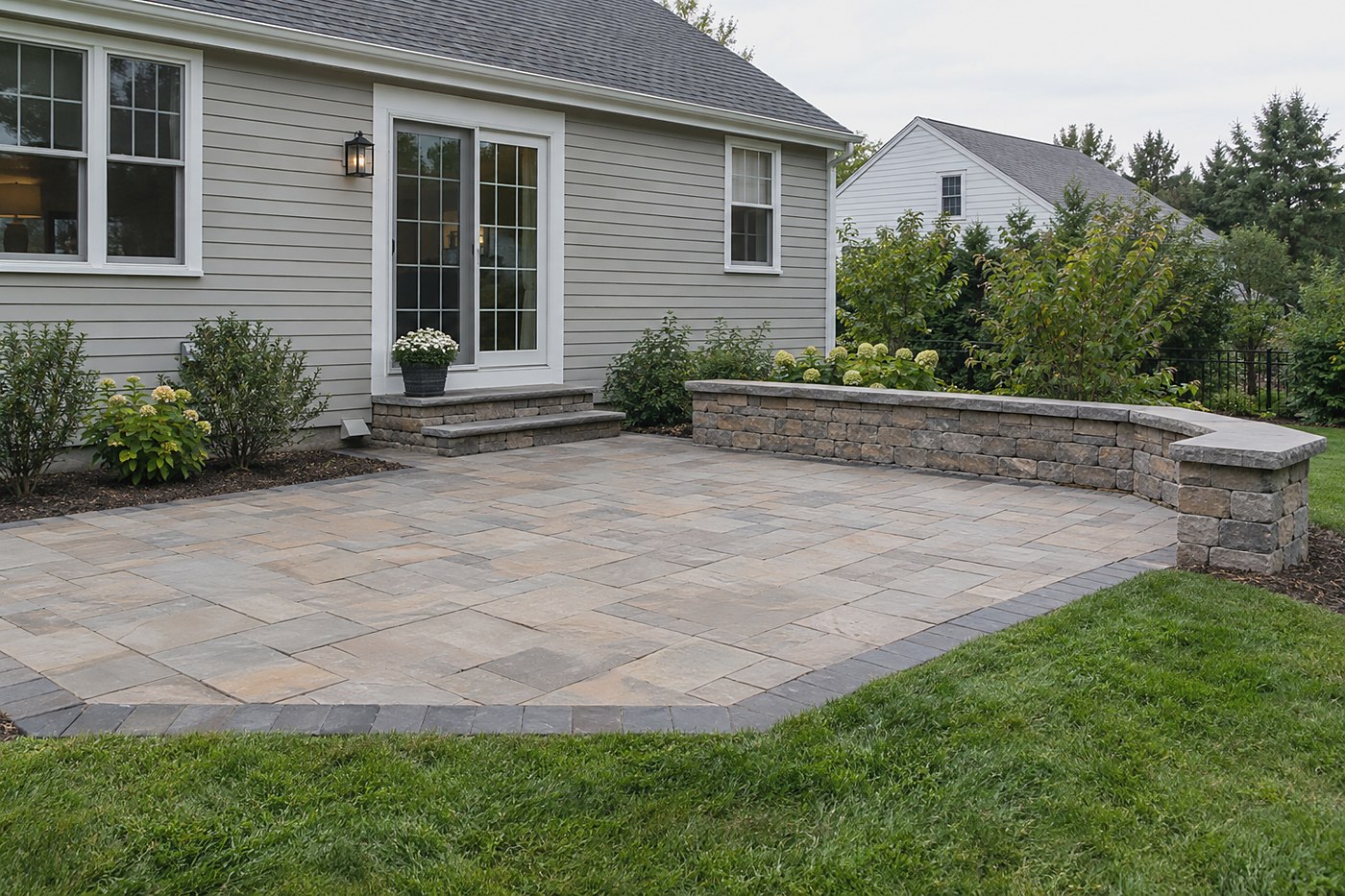
Pavers are separate units set in a base on purpose. The base is built to move a little without tearing. If one paver settles or cracks, it can be lifted and reset without replacing the whole patio. Concrete cannot be repaired that way. That is the trade: pavers cost more up front and are far easier to fix later.
Concrete is one pour and done, which is fast and looks clean on day one. Its weakness is the same as its strength: it is one rigid slab. In a climate that freezes and thaws, that slab cracks along its control joints and sometimes beyond them, and a crack never closes back up. Repairs to a cracked slab are visible by nature.
Pavers are flexible. The joints between them take small movement without cracking, and if a section ever needs to come up for a repair or a utility line, the same stones go back down and read as if nothing happened. That flexibility is the main reason the two surfaces age so differently here.
The practical version for a Massachusetts yard in the 30-inch frost zone: every hard surface freezes and thaws many times each winter. The question is not whether it moves but what happens when it does. A slab resists the movement and then cracks; a paver field absorbs a little at every joint and goes back where it was.
The money half: concrete is lowest up front, stamped concrete climbs from there, and pavers sit above both. The second cost is where it evens out. A cracked slab means break it out and patch it, and the patch never matches. Re-setting pavers is a fraction of that, and the same stones go back down. Over ten or fifteen winters, cheaper stops being cheaper.
There is a place for each. Concrete is fine for a utility slab, a garage apron, or a shed floor. Where the surface is the yard and it has to stay level through frost, a base and a surface that can move is worth the difference on day one.
One more practical point on timing: concrete needs to cure and cannot be walked on for days, while pavers are ready for furniture as soon as the last one is set. If you want to use the space this season and not next, that difference matters as much as the cost. Pavers also let you lift a single unit later to reach a utility line, which a slab never does.
- Poured concrete lowest up front, cracks as one piece, hard to repair
- Stamped concrete pattern on a slab, same cracking behavior
- Pavers more up front, fixable in sections, forgiving of frost
Ready when you are.
Free estimates in Mansfield and the towns around it.