11. Walkways
Walkways, steps and driveway aprons
A walkway is a small patio you use every day. Because you use it every day, the details that fail are the ones you will notice first.
Walkways and steps get the same base and drainage as a patio, only tighter and steeper, which makes them less forgiving. A step that is a hair out of level or a walk that slopes the wrong way is felt, not just seen. That is why a good walkway build starts with the height difference from the door to the grade, not with the look of the stone.
A driveway apron, where the paved surface meets the road or the garage, is the one spot that catches everything: plow snow, running water, and the weight of whatever rolls over it. It needs a solid edge and a slope that sends water away from both the house and the street. Done right, it is invisible and lasts. Done wrong, it is the first thing to move.
An apron is the strip where a walk or driveway meets the road, and it takes more punishment than any other part of the run. Cars turn across it, the plow drags over it in winter and water from the street runs toward it. That is why it is worth digging and base-building even more carefully than the rest of the path.
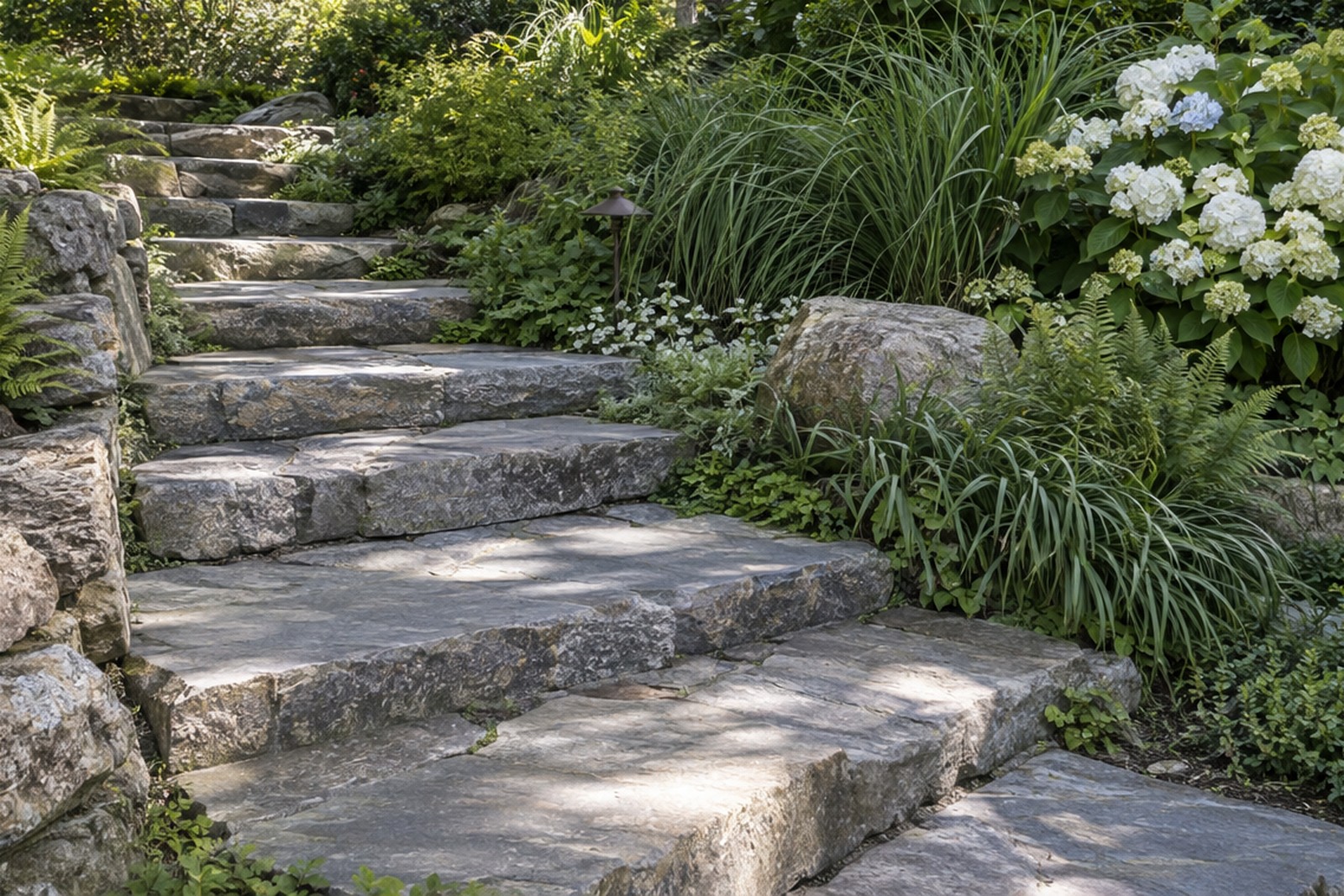
Steps are the other place detail pays off. Each tread wants a slight fall so water leaves the landing instead of standing on it, and the risers want to be consistent so the run feels steady underfoot. Small things, and they are the difference between a walk that feels finished and one that feels almost.
The transition is the detail that is easiest to get wrong. A hard lip or step where the apron meets the road or the garage is where water and the plow find it. A short ramp built on its own compacted base and cut to shed water is the difference between a decade of service and a crack in the first winter.
Heavy loads change the base. A walkway carries feet, but an apron carries a car or a truck, so the base is dug deeper and compacted harder. If a plow or a delivery truck crosses it, say so up front. That changes the build, not just the price.
Salt is the second thing to think about, because it is hard on both concrete and pavers and worse on a surface that already takes plow abuse. Sand or a paver-safe de-icer does less damage than rock salt over a season. On an apron that sees the road plow, that one choice is the difference between a surface that still looks new after five winters and one that is chipping at the edges.
- Steps risers stay even, treads stay level, edges get restraint
- Walkways slope away from the house, base as deep as a patio
- Aprons built for plow and traffic, water sent clear
Ready when you are.
Free estimates in Mansfield and the towns around it.